


WAYIN: Your Premier Solar Micro Inverter Manufacturer
Rich Experience
We have been developing in the new energy industry, especially the solar energy industry, for more than ten years. We have a strong team that specializes in designing and developing green energy products, and constantly launches unique upgraded products on the market.
One Stop Solution
We provide one-stop solutions for customers in the new energy industry. Whether you need solar panels, inverters, batteries, home solar, industrial solar, or agricultural solar, our engineers and labs are here to help you research solutions, implement your ideas, and optimize your costs.
Professional Service Team
Our professional service team is committed to providing customers with professional, efficient and reliable services. We provide progress tracking at each stage according to the order to ensure customer interests and support customers in handling after-sales issues and market analysis strategies.
Fast Delivery
We have our own factories, warehouses and logistics centers, and can reasonably arrange production and shipment, even if you are an overseas partner. This helps you produce and ship new products as quickly as possible and update products in your store.
Type of Solar Micro Inverter


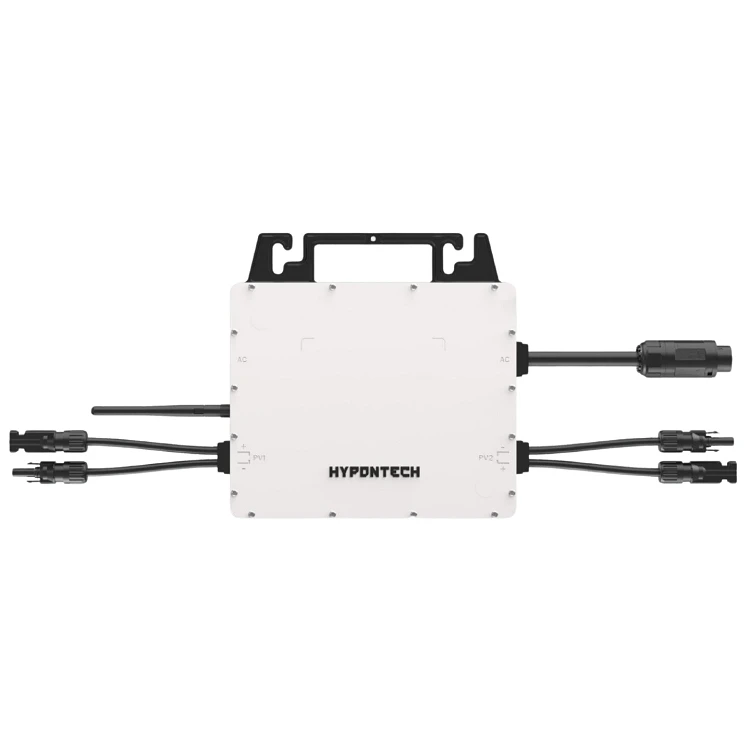
A device used with solar arrays to convert the energy that is generated (Direct Current) to usable electricity for a home (Alternating Current). Each micro-inverter is connected to a single solar panel for maximum control and reliability.
A solar micro-inverter is one of two types of inverters that can be used with a home solar system. Microinverters have several advantages over conventional inverters, called string inverters. String inverters are connected to multiple solar panels in a row, or string, and converts all the incoming DC energy to usable AC energy. Because the microinverter is connected to a single solar panel instead of a string of them, there are a number of benefits to this technology.
How Does Micro-Inverter Work?
Inverter plays an important conversion role in the solar system, it needs to convert the DC generated by the solar system to AC used by home. Generally speaking, string inverter can connect PV panels in series and parallel to form a PV array, then convert DC into AC and connected to the grid.
Micro-inverter also convert DC to AC, but the difference is that a micro-inverter is installed after each PV module, and the module-level conversion efficiency is much higher than that of conventional inverters.
Solar microinverter typically consists of the following components:
●Dc Input
Used to connect the DC output of the photovoltaic panel to the microinverter.
●MPPT Component
Used to track the maximum power point of the PV panel, ensuring that the maximum possible energy is extracted from the PV panel.
●Inverter Circuit
A critical circuit in which DC energy is converted into AC power.
●Control Circuits
Monitor and control the operation of microinverters, including synchronization and secure connection to the grid. The output connects the generated alternating current energy to the home or commercial grid. Since each photovoltaic panel is equipped with a microinverter, the efficiency of the entire photovoltaic power generation system will be higher, and once a photovoltaic panel fails, it will not affect the operation of the entire system.
Advantages of Solar Micro Inverter
Lowered Chance of System Shutdowns
The greatest advantage of microinverters over traditional inverters is the drastically lowered chance of a system shutdown. If one or two microinverters fail, the remaining panels in the system keep functioning. Since microinverters are plug-and-play devices, it is easy to swap them for a newer unit within a few minutes.
Panel-Level Monitoring
If a single panel stops working in a system with a string inverter, the entire system shuts down. Microinverters provide panel-level monitoring, meaning you can always tell which panel is underperforming, allowing much easier troubleshooting.
No Sizing Restrictions
String inverters have defined input and output specifications, meaning you can only have a specific number of solar panels connected to a single string. If solar installations become too complex, then wiring your array can become difficult. With microinverters, every inverter works at the panel level, eliminating string-size restrictions.
More Power
Systems with central or string inverters are much more sensitive to fluctuations in the output of individual panels. This means that systems with traditional inverters are only as powerful as their weakest panel. Microinverters ensure that you’re harnessing the maximum power per panel, avoiding wasted energy. This is also helpful on uneven or complex roofs, as microinverters maintain maximum efficiency regardless of arrangement.
Longer Lifespan
Most string inverters on the market come with a 10- or 12-year warranty. Modern microinverters last much longer and even come with 25-year warranties, matching the lifespan of most modern solar panels.
Easy Installation
Traditional inverters are large, bulky objects that are difficult to carry and install. Microinverters solve this problem by being much smaller; they are not just easy to carry but also connect. Most technicians can install a microinverter within a minute or two.
Ease of System Expansion
Imagine you installed a 3 kW solar system with a 3 kW string inverter. If your energy needs increase and you want to add another 1 kW of panels, it is difficult to expand your inverter capability. In the case of microinverters, however, you can easily add solar panels without worrying about the compatibility of other components.
Rapid Shutdown Capability
If firefighters, first responders or utility personnel need access to your rooftop for an emergency or power line service, you’ll need to shut down your solar photovoltaic system (PV system) so they’ll be safe from high voltage. Microinverters have the capability to quickly and efficiently cut power supply to solar installations.
The three most common inverter options are microinverters, string inverters, and power optimizers. Here's how microinverters compare to the other two popular inverter types:
String Inverters vs. Microinverters
The most significant difference between string and microinverters is that when using a string inverter to wire your panels, depending on the size of your solar system, you only need to use one or two string inverters (usually referred to as "strings"). This makes troubleshooting more manageable if your system fails, as all 6-12 panels of the inverter supports are wired to just one destination. Given the minimal wiring requirements, string inverters are also cheaper to install and maintain than microinverters. That being said, the simplified wiring scheme can also make it more expensive to expand your solar system in the future. It also means that underperforming solar panels will affect the whole circuit rather than just its own output.
Power Optimizers vs. Microinverters
Unlike micro and string inverters, power optimizers don't immediately convert direct currents to alternate currents. Instead, they "condition" it and send it to a centralized inverter. These module-level power electronics, or MLPEs, are very similar to microinverters because they can monitor individual solar panel performance and allow for flexibility in building a solar system on a marginally shaded roof.
The rooftop work for a solar system follows an easy, step-by-step process. Use the overview below as your guide or dig into the details in each of the sections that follow:
●Position the AC cabling
●Install an AC branch circuit junction box/isolator
●Attach the microinverters to the PV racking
●Create a paper installation map
●Ground the microinverters (if required)
●Dress the cabling
●Connect the microinverters to the cabling
●Terminate the unused end of the cabling and seal any unused cable connections
●Connect the cabling to the AC branch circuit junction box
●Connect the PV Modules to the microinverters
Choose the Best Micro Inverters for Your Solar System
As you browse micro inverters, a few key characteristics can help you narrow down your options:
Efficiency Level
Micro inverters have varying levels of efficiency, just like your solar panels. The efficiency level measures how much energy is lost during the DC to AC conversion (in the form of heat). The less lost energy, the better. High-efficiency micro inverters generally contribute to improved system efficiencies, which boosts your solar production and maximizes the return on investment.
Size
There are different wattage sizes of micro inverters, each one intended to be paired with the specific wattage of the panels in the system.
Price
Determining how much a micro inverter costs depends on various features. Remember that even though a micro inverter is usually a more significant up-front investment, the increased efficiency can pay off in the long run.
MPPT
Maximum Power Point Tracking (MPPT) is a technique used with variable power supplies to maximize energy extraction as conditions change. This technology is most commonly used in PV systems. The core problem addressed by MPPT is that the power transfer efficiency of a solar cell depends on the amount of sunlight available, shade, solar panel temperature and electrical characteristics of the load.
Warranty
The power of a single micro-inverter is 250w-1000w. It uses the glue filling process and has an IP67 enclosure rating. It is estimated that the electrical parameters of the micro-inverter are basically stable within the ambient temperature range of -40℃ to 65℃. The service life of the micro-inverter is 2-3 times that of the string inverter, which is up to 25 years and consistent with the PV modules, and is complied with the design and use of PV systems.
Durability and Environmental Suitability
Ensure that the micro inverter is designed to withstand the environmental conditions in your location, including temperature variations, humidity, and exposure to UV radiation. Look for models with robust construction.
Safety Certifications
Verify that the micro inverter complies with relevant safety standards and certifications in your region. This ensures that the equipment meets safety requirements and is suitable for installation.
Best Micro Inverter Maintenance Guide
Regular Cleaning
Maintaining a clean and debris-free environment is vital for the efficient operation of micro inverters. Dust, dirt, leaves, and other debris can accumulate on the surface of the inverters, obstructing the heat dissipation and reducing their performance. It is recommended to clean the micro inverters regularly, at least once every six months or as needed. To clean the micro inverters, follow these steps:
●Turn off the AC and DC power supply.
●Use a soft brush or cloth to gently remove any loose dirt or debris from the surface.
●Dampen a cloth with a mild detergent solution and wipe the surface to remove any stubborn grime.
●Rinse the micro inverters with clean water and allow them to dry completely before turning the power back on.
Monitoring and Troubleshooting
Regular monitoring of the micro inverters is crucial to identify any potential issues and address them promptly. Many micro inverters come with monitoring systems that allow you to track the performance of each unit and detect any anomalies. Make sure to regularly check the monitoring system and look out for the following:
●Abnormal voltage or current readings
●Constantly fluctuating power output
●Excessive heating or unusual noise
●Error messages or fault codes
If you notice any of these signs, consult the manufacturer's manual or contact a professional technician for troubleshooting and repairs.
Protection from Environmental Factors
Micro inverters are exposed to various environmental factors that can affect their performance and lifespan. To ensure their longevity, consider implementing the following measures:
●Install the micro inverters in a shaded and well-ventilated area to minimize heat buildup.
●Protect the inverters from excess moisture and humidity by using weatherproof enclosures or covers.
●Shield the micro inverters from direct sunlight to prevent overheating.
●Regularly inspect the wiring and connections for any signs of damage or wear.
By taking these proactive steps, you can significantly enhance the durability and reliability of your micro inverters.
Our Warehouse
We have our own factories, warehouses and logistics centers, which enable us to produce and deliver new products to customers as quickly as possible and help customers develop larger markets.

Our Certificate
We are committed to the development and production of green energy-related products, and have obtained relevant certificates, such as CE certificates, and patent certificates, to provide customers with high-quality, reliable products.

Ultimate FAQ Guide to Flexible Solar Panel
Q: What are the benefits of a micro inverter?
Easily Expandable.
Performance Reports.
No Single Point of Failure.
Improved Safety.
Silent.
Q: Are micro-inverters better than inverters?
Q: What is the difference between a central inverter and a micro inverter?
Q: What is the difference between a microinverter and an optimizer?
Q: What are the disadvantages of micro-inverters?
Q: Are micro-inverters better for solar panels?
Q: How many solar panels can a micro inverter handle?
Q: How long do micro inverters last?
Q: How many micro inverters do I need per solar panel?
Q: Do solar panels have micro-inverters?
Q: How efficient is a solar panel micro inverter?
Q: Are micro-inverters built into solar panels?
Q: What do micro inverters connect to?
Q: What are the different types of micro inverters?
Q: Are Microinverters reliable?
Q: Are Microinverters safe?
Q: What type of inverter is best for solar?
Q: Can you mix and match solar panels with micro inverters?
Q: What size micro inverter do I need?
Q: Can micro inverters get wet?
Q: How many micro inverters can be connected together?
Q: Can you have 2 solar inverters in one house?
Q: Can the Micro-Inverter work in off-grid mode (island mode)?
Q: How will the Micro-Inverter behave when the grid is down?
Q: What will the Micro-Inverter do when there is short circuit on the AC power line?
We're well-known as one of the leading solar micro inverter manufacturers and suppliers in China. Please rest assured to wholesale custom made solar micro inverter from our factory. Good service and quality products are available.
Solar Grid Tie Micro Inverter, Micro inverters for off grid, Grid tie micro inverter