


WAYIN: Your Premier Borewell Pump Manufacturer
Rich Experience
We have been developing in the new energy industry, especially the solar energy industry, for more than ten years. We have a strong team that specializes in designing and developing green energy products, and constantly launches unique upgraded products on the market.
One Stop Solution
We provide one-stop solutions for customers in the new energy industry. Whether you need solar panels, inverters, batteries, home solar, industrial solar, or agricultural solar, our engineers and labs are here to help you research solutions, implement your ideas, and optimize your costs.
Professional Service Team
Our professional service team is committed to providing customers with professional, efficient and reliable services. We provide progress tracking at each stage according to the order to ensure customer interests and support customers in handling after-sales issues and market analysis strategies.
Fast Delivery
We have our own factories, warehouses and logistics centers, and can reasonably arrange production and shipment, even if you are an overseas partner. This helps you produce and ship new products as quickly as possible and update products in your store.
Type of Borewell Pump


A borewell pump, also known as submersible pump or borehole pump, is a device which has a hermetically sealed motor close-coupled to the pump body. The whole assembly is submerged in the fluid to be pumped. The main advantage of this type of pump is that it prevents pump cavitation, a problem associated with a high elevation difference between the pump and the fluid surface. Submersible pumps push fluid to the surface, rather than jet pumps, which create a vacuum and rely upon atmospheric pressure. Submersibles use pressurized fluid from the surface to drive a hydraulic motor downhole, rather than an electric motor, and are used in heavy oil applications with heated water as the motive fluid.
Units work by a motor driving a shaft which in turn drives either one or several impellers. The motor is located at the bottom of the pump, with the pump located above the motor. The pump intake is in the middle of the unit, with the discharge at the top contrary to all other pump designs.
The first impeller draws fluid through a suction strainer, where fluid passes through to the diffuser. If the unit is of single impeller design liquid then passes around the non-return valve exiting the pump. Should the design be of multi impeller construction liquid repeatedly enters a suction casing, then discharge casing across several impellers, before passing around the non-return valve and exiting the pump. Impellers are usually of closed or semi open axial design if handling sand.
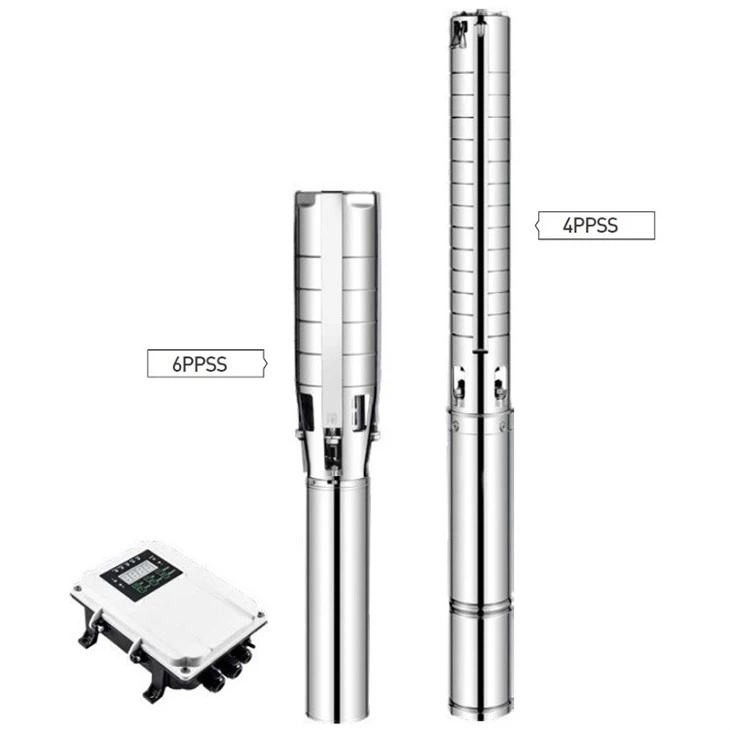
There are two main types of borehole pumps: submersible and surface-mounted.
Submersible Pumps:
These are installed at the bottom of your borehole, and they are the most common type of borehole pump used in domestic applications. Submersible pumps are very efficient and can produce a high volume of water.
Surface-Mounted Pumps:
As the name suggests, surface-mounted pumps are installed on the surface of the ground, and they are typically used for boreholes that are less than 25 feet deep. Surface-mounted pumps are less efficient than submersible pumps, but they are also less expensive.
We can supply, install, repair and maintain both.
Advantages of Using a Submersible Borewell Pump


Convenient and Easy to Use
Submersible water pumps are lightweight, small in size, and portable, which makes them both convenient and easy to use. You can take them where you need them and easily install them when needed, which will save you time and money.
Submersible Pumps are Efficient
The submersible pump works directly at the source, which means that it typically has to use less effort to pump the liquid(s).
Submersible Pumps Tend to be Corrosion Resistant
One of the top benefits of high-end submersible pumps is that they are corrosion resistant, which means that you can save money avoiding costly repairs. Corrosion resistant submersible pumps are usually made from stainless steel components.
There are a Wide Variety of Submersible Pumps
There are many different types of submersible pumps, which make it easier to find the pump that is best suited for your unique pumping needs. While some submersible pumps need to be completely submerged, others can work while they are half submerged. There are also submersible pumps that can handle both liquids and solids.
It Produces Low or Almost No Noise
Surface pumps often cause a considerable amount of noise. However, being underwater, the sound of Submersible pumps softens, creating low noise, barely audible.
Submersible Pumps are Self-Priming
Priming a centrifugal pump requires both time and money. Other water pumps without priming too start to malfunction, causing financial loss. However, submersible pumps need no priming, which saves unnecessary time-waste, cost, & hassle.
Primary Parts of Borewell Pump
Motor
The motor is the core of a submersible pump. It turns electrical energy into mechanical energy to propel the pump. The motor is ordinarily hermetically sealed and oil-filled to prevent water from entering and harming the motor.
Impeller
The impeller is responsible for providing the requisite pressure to circulate water through the pump. It consists of curved blades that spin swiftly, generating centrifugal force.
Discharge Pipe
The discharge pipe is an integral component of a submersible pump that delivers water from the pump to the location of usage. It is ordinarily composed of PVC or polyethylene and is available in varying diameters and lengths. The diameter of the discharge pipe impacts the pump’s flow rate and pressure.
Control Panel
The control panel allows you to start, halt, and control the functioning of the submersible pump. Familiarize yourself with the control panel’s functions and indications.
Check Valve
The check valve is a one-way valve that prevents water from flowing back into the pump when it is switched off.
Easy Tie Adapters
Easy tie adapters are used to attach the pump’s power cables and discharge pipe. Ensure that the simple tie adapters are firmly attached to prevent any unsecured connections.
Clamps
Clamps are used to secure the pump’s power wires and discharge pipe to prevent them from sliding loose.
Heat Shrink Splice Kits
Heat shrink splice packages are used to join and protect electrical connections. Inspect the heat shrink splice kits often to ensure they are undamaged and correctly sealed.
Torque Arrestor
The torque arrestor is a mechanism that prevents the pump from rotating or twisting during operation. It serves to steady the pump and prolong its longevity.
Safety Rope
The safety cable is used to lower and retrieve the submersible pump from the well or borehole. Ensure that the safety rope is securely fastened to the pump and is in good condition.
Applications of Borewell Pump
Extremely Deep Wells
If a deep well is crooked, it may cause problems with shafting, making the submersible borewell pump the only choice.
01
High Risk of Surface Flooding
In any application where there is a risk of a pump being flooded or hammered by spraying water, the hermetic seal of a submersible pump protects the motor.
02
Quiet Operation Required
A situation where you don’t want any noise is perfect for submersible borewell pumps because they can’t be heard underwater.
03
Little or No Installation Space
Pumps under sidewalks or streets don’t really have a lot of available installation space. A submersible borewell pump stays out of the way.
04
Agriculture
For many agricultural applications, there are two major advantages: there is almost no maintenance for submersible pumps and when they are hidden, they are less likely to be vandalized.
05
How Do You Select Borehole Pumps?
Of course, an expert from WAYIN will be happy to help you select the right well pump for your application. You can always contact us without obligation or request a quote. We will base the selection on the points below, among other things, so keep in mind that this information must be known whether we can arrive at this information together during a telephone conversation without obligation.
Depth of the Source
It is not entirely unimportant to know how deep the water is in the well, what is the water level? A well pump cannot withstand running dry and it is therefore important that there is always sufficient water supply for the pump in the well.

Head of the Pump
It is important to know from how deep the water should be pumped, but also how much pressure is required to pump the medium further. This head can often be calculated when you know more about the location where the medium is needed or the piping system.

Capacity of the Pump
How many liters /cubic meter is required per second, minute, hour? What should the pump deliver in number of medium. This question is often asked together with the head of the pump and is also referred to as the flow rate of the pump.
WAYIN's Borewell Pump Manufacturing Process
In this first stage, it is where the own smelting of aluminum necessary for the manufacture takes place and that later will be injected into the molds.
The aluminum is injected into the molds to obtain the raw cast iron, that is, the casing of the water pump.
As for machining, this process has highly efficient robotization mechanisms and precision machinery that guarantee OEM standards in all pump works.
The assembly process also has automated lines to maximize efficiency in series with more than 3,000 pieces, and it also has a large capacity. Quality control is essential for the resulting quality standards of water pumps. This process ensures the correct tightening in the assembly of each component, with automatic presses in place to accurately control pressure during the assembly.
With two-stage picking, all parts have RFID frequency identification in place. An automated stock management ensures efficient delivery.
Borewell Pump Simple Installation Procedures
★Ensure the borehole water zone is deep enough to avoid sand-fill-ups later.
★Prepare the floor of the borehole for the pump installation by putting concrete floor where it is necessary.
★Make all the piping materials ready and get a plumber to standby if you don’t have plumbing skill.
★Calculate the distance of the bore hole to the ground surface where you are standing.
★Use the distance obtained in the measurement to make the pipe connection for the discharge port of the pump and ensure the in-built cable length will be enough to go that far.
★Assuming you have already tested the pump on the ground surface to ensure its impeller is rotating very well, lower it into the with the PVC pipe connected to its discharge port.
★At the calculated or measured depth, the pump supposed to be in the water zone of the borehole but not resting on the floor of the borehole.
★Run a test of the pump by connecting the cable to electric power supply socket and turn the Switch ON.
★Watch and observe how long it took the pump to bring out water through the PVC pipe connected to the discharge port.
★Observe the neatness of the water coming out and allow the pump to run for about 1 hour this will enable the pump to pump out most of the dirty water in the borehole before the clean water will start coming out.
★If you have got clean water coming out and the pump is just few feet into the water zone while the remaining 70% feet in the water zone is the distance between the impeller of the pump and the floor of the borehole, then you are good to go!
★Prepare for hanging and suspension of the pump using either the PVC pipe, special rope tied on the pump or the pump cable (not recommended). After suspension or hanging, your pump can now be left alone.
★To prevent sand from falling into the borehole, it is also important that pipe guards were installed on your borehole after the drilling before installing the pump.
★Once everything has started working properly, always allow the water that will come out in the first 30 minutes to flow away before connecting your water tank pipe to it. The reason is to ensure that clean water has started coming out before sending the water to the water tank.
How to Extend Life of Your Submersible Borewell Pump?
Regular Cleanings Control
Submersible pumps are intended for pumping clean water. In general, the more sandy material and other abrasive substances present in the water, the sooner your pump wears out, so it is important to clean new or dirty wells an boreholes. For each well pump the allowed amount of solid particles is given by the manufacturer.
Beware of a Lack Of Water in Your Well
Submersible well pumps work submerged in a dynamic water levels and it is necessary to ensure that the water never drops below the level of the pump. The pumps should be suspended deep enough in the well. If the water level falls too much, the submersible pump may run dry and get damaged.
Correct Submersion Depth
It is very important to install your submersible pump at the correct depth not only as prevention against dry-running, but also as protection against damage to your pump due to high water pressure. When submersed at a greater depth, the water column exerts a higher pressure on the pump, which then affects its tightness.
Well Pump Cooling
Cooling the submersible pump is another reason why it is important to pay attention to the water levels in your well. Sufficient water flow around the pump (at least at a speed of 0.15 m/s) provides it necessary cooling, so that the motor does not overheat. The optimal space between the pump coat and the borehole wall is at least 10 mm and this limit also serves as protection against mechanical damage.
Voltage Fluctuations in the Network
Well pumps operate within a certain voltage range. However, the voltage in the network is not always constant and fluctuates, which can result in more frequent pump shutdowns and engine damage.
Our Warehouse
We have our own factories, warehouses and logistics centers, which enable us to produce and deliver new products to customers as quickly as possible and help customers develop larger markets.

Our Certificate
We are committed to the development and production of green energy-related products, and have obtained relevant certificates, such as CE certificates, and patent certificates, to provide customers with high-quality, reliable products.

Ultimate FAQ Guide to Borewell Pump
Q: How does Borewell pump work?
Q: What is the difference between a well point and a submersible pump?
Q: Which pump is used for Borewell?
Q: What is the function of borehole pump?
Q: How long can you run a bore pump?
Q: How long does a bore pump last?
Q: What is the major disadvantage of submersible pump?
Q: Where should a bore pump be placed?
Q: How do I choose a motor and pump for Borewell?
Q: What size is a Borewell pump?
Q: Does a borehole pump use a lot of electricity?
Q: Why the submersible pump is used instead of borehole pump?
Q: What happens when a borehole pump runs dry?
Q: Do bore pumps need maintenance?
Q: How do you maintain a bore pump?
Q: Why is my bore pump running but no water?
Q: How do I protect my bore pump from running dry?
Q: Do submersible pumps shut off automatically?
Q: Do submersible pumps get clogged?
Q: What PSI should a bore pump be?
Q: Why does a bore pump lose pressure?
Q: How long does it take to install a borehole pump?
We're well-known as one of the leading borewell pump manufacturers and suppliers in China. Please rest assured to wholesale custom made borewell pump from our factory. Good service and quality products are available.
Bore Well Submersible Pump, Solar Pump For Borewell, Solar Borehole Pumps